
Interstitial Tissue

By Therese DesCamp

Western medicine has recently “discovered” the interstitium, the interconnected connective tissue in human bodies; in fact, they now believe that our interstitial tissue actually acts as a third circulation system. “Discovered” is a joke: these tissues have always been there. But westerners considered them mere inert webbing, designed to hold organs in place, disconnected from each other. In surgical settings, this meant that interstitual tissues could be removed without much thought. But Chinese medicine has always recognized, honoured and worked with the interstitium. In that worldview, it’s where the chi flows. It’s an entire system, necessary to the overall health of a being.
I’m writing about interstitium because so much of the connective tissue of our collective lives is disappearing—being removed—without much thought. Churches, voluntary groups, retreat centres, religious orders—we’ve seen the abrupt closure of these trusted institutions because no one can seem to figure out how to make them work in this new world. “Compost the church” read a headline on an email recently. And I get it, frankly—the top-heavy administration and onerous procedures set in place generations ago don’t really work anymore. It may be best to let things die and see what grows from the remains.
But we still need interstitial tissue during this in-between time! Just like our bodies, human society requires interconnection for health. And if something fresh is to grow from the composted remains of these beloved institutions, someone is going to have to do the hard work of tending that new interstitial tissue.
This brings me to the spirituality of voluntary associations. Believe me: when practiced with consciousness, serving on a board can be the ultimate training ground for three-centered awareness. Name your organizational commitment—spiritual, environmental, educational, medical—they’re all brilliant opportunities for black-belt practice. Yes, this kind of involvement will unsettle me and challenge my practice: but that’s a good thing, designed to make me deepen.
Working as a contemplative on a board requires way more than asking to start meetings with a time of silence. First there’s attention, the mental labour of taking in and dealing with the details of an organization. Personally, because I am not naturally drawn to administration, it’s hard work to consciously attend to the financial health, projects, staffing needs, and volunteers of an organization. It is mental labour to pay close attention to reports and discussions. It is conscious service to listen closely and make sure that I understand what another is saying. It is an act of the will to keep my mind focused on the discussion at hand.
The contemplative practice I find most effective for this mental labour is to step into that silent centre we find inside us during meditation. It is from that stillness that I listen and consider.
There’s a second kind of toil, a heart labour, required for board work: letting go. This entails detaching from my own particular vision so I can see the beauty in another’s vision. This is the effort of allowing a situation to unfold rather than attempting to steer the process. This is the task of not making quick judgments but instead turning toward others in curiosity. This is the patience required to let someone else finish their thoughts rather than assume that I know where they are going.
The contemplative practice here is to pause, to consider; to let go of my anxious desires and allow something new to arise. This kind of work feels a lot like when I set aside my thoughts in Centering Prayer and return to that sacred word.
And finally there is the emotional task—the bodily awareness—that is an inevitable part of working with others. Just writing about this makes my insides churn. I come to this kind of voluntary labour with decades of experience, and not all of that has been pleasant. I’ve been part of church meetings where alcohol derailed the entire process. I’ve chaired environmental boards where one member repeatedly humiliated others. I’ve worked with groups who fell under the thrall of a charismatic and manipulative leader. My seeming powerlessness in these situations—and the way I did, or did not, deal with them—lives in my memory and my body. Some of those experiences have become “triggers,” that overused psychological word which refers to experiences that evoke a crippling flood of emotion accompanied by auto-pilot behavior.*

The full body sensation of an emotional trigger requires the Welcome Practice writ large, extended in real time to the real world. Sitting in a board meeting, I can usually do the mental work to attend to what’s being said. I can usually do the wisdom work to let go of my preconceived ideas and consider things non-anxiously. But holy hell, to be aware when bodily sensations are hijacking me? That’s hard work.
Sometimes, I’m simply unable to process what’s happening; my mind goes blank. Sometimes I am able to consciously stop and breathe. Sometimes I can mentally flag the situation so as to return later and look more closely later. And sometimes, I just plain react. The apologies that result from these reactions are also part of the practice! But sometimes, I get it right. I recognize what’s happening in my body, and I accurately assess the real-life situation in spite of all the alarms going off. That capacity only grows, if I keep stepping up.
As contemplatives, we learn all these things: close attention to the now; letting go of my need to fix or correct or direct; staying with my body when something sets me off. These are the heart of contemplative life. These are also gifts to the world, because our practice is never just about time on the mat. It’s also about the way we do the work we’ve been given.
Serving on a board is a brilliant place to practice for my own sake. But more importantly, when I do this work, I am doing it for the sake of our beautiful, broken world. It is an offering to “Our Common Father” as well as a collective work to help grow new interstitial tissue among all beings. Our hard work helps breathes life into the compost, working with the Spirit to grow something that ordinary eyes can’t see but that hearts and bodies recognize.
*Of course, such a reaction doesn’t just happen when we are volunteering. This is what life and relationships can do to us: install triggers that others unwittingly—and sometimes wittingly—push. Even when unintentionally activated, a trigger almost always an initial, instantaneous, and uncomfortable inner response. The choice I have is about how I deal with that discomfort.
Images taken by: George Meier.
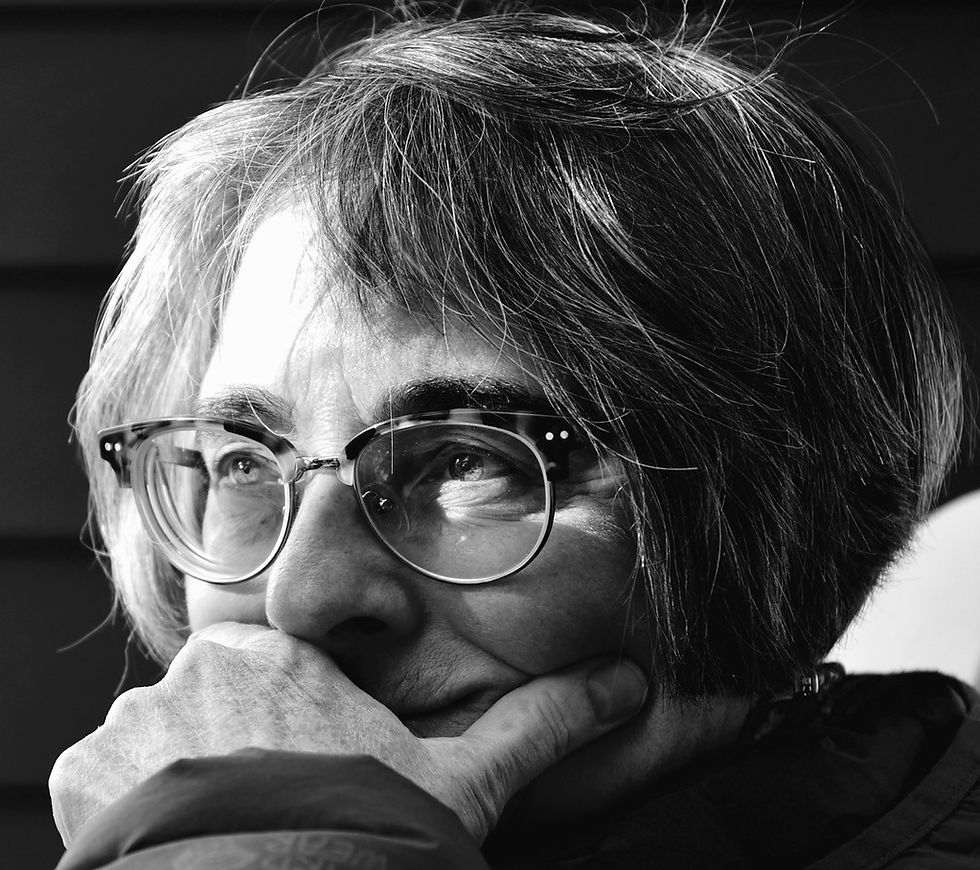
Therese DesCamp has a deep longing to encounter the Holy as expressed through the being-ness of creation. She lives this out in the Kootenays of British Columbia, Canada through her long-term practice of meditation and prayer, as well as through her life as a spouse, writer, spiritual director, minister and recovering alcoholic. She is committed to the work of The Contemplative Society in part because of the profound wisdom she has found in the teachings of Cynthia Bourgeault; but also because she believes in The Contemplative Society’s capacity to offer training, support and community to those who are “holding the post” in our wide-flung communities. Therese's most recent book is Hands Like Roots: Notes from an Entangled Contemplative Life. She was long-listed for the 2023 CBC Nonfiction Award. See more at widespot.ca. Therese is a teacher of Christian contemplative Wisdom working in the lineage of Cynthia Bourgeault and within the active collegial and mentoring network of that lineage.
E-mail Therese at: admin@contemplative.org


Comments